Wiring and rewiring in Grand Rapids — old houses, and the wiring they came with
A lot of the housing stock here predates modern wiring, and the two systems that come up most often — knob-and-tube and aluminum branch circuits — are treated very differently by inspectors and insurers.
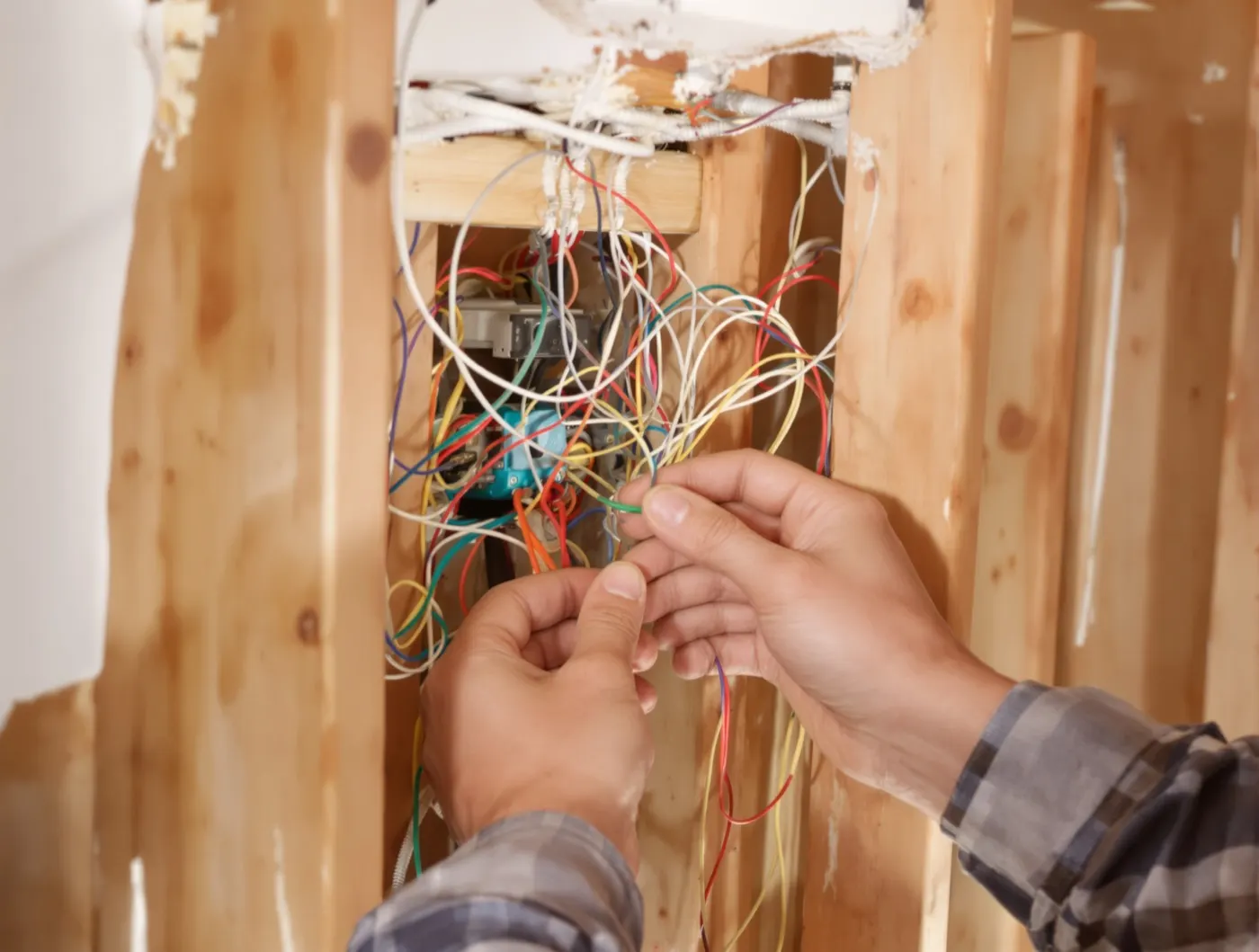
Knob-and-tube: what it is and why it matters
Knob-and-tube is the earliest common residential wiring — separate hot and neutral conductors run through ceramic knobs and tubes, with no ground. It is not automatically unsafe where it is intact and undisturbed, and that is the catch: a century later, very little of it is either.
What actually causes the problems is what has happened to it since. Insulation blown into a ceiling around conductors designed to shed heat into open air. A century of splices in accessible spots. Three-prong outlets fitted to a two-wire circuit so it looks grounded when it is not. Insurers frequently ask about it, and some will not write a policy while it remains.
Aluminum branch circuits — a different problem entirely
Homes wired in roughly the mid-1960s to late-1970s sometimes have solid aluminum branch wiring. Aluminum expands and contracts more than copper and oxidizes differently, so the failure point is almost always the connection — at outlets, switches and splices — rather than the wire in the wall.
Full replacement is one answer and often not the proportionate one. The common remediation is treating every termination: approved connectors at each device, or pigtailing to copper with listed devices. An electrician who insists the only option is a whole-house rewire, without looking at the terminations, is worth a second opinion.
Signs the wiring is the problem, not the appliance
- Outlets or switch plates that are warm to the touch.
- A breaker that trips with nothing obviously plugged in.
- Two-prong outlets, or three-prong outlets that a tester says are not grounded.
- Lights that flicker across several rooms rather than in one fixture.
- Cloth-covered cable visible in the basement or attic, cracking where it is handled.
- An extension cord that has become permanent — usually a sign there are not enough circuits.
Whole-house rewire, or just the parts that need it
A full rewire means new cable to every device, new boxes, grounding throughout, and usually a new panel at the same time. It is disruptive — walls and ceilings get opened — and it is the right call when the existing system has no ground and no safe path forward.
Plenty of houses do not need that. Rewiring the kitchen and bathrooms, adding dedicated circuits where the load actually is, and grounding the circuits that serve electronics gets most of the benefit for a fraction of the disruption. Ask for both prices and the reasoning.
Permits, inspection and covering up
Rewiring is permitted, inspected work, and the sequencing matters more here than on any other job: work must not be enclosed, covered up or put into operation until it has been inspected and approved by the electrical inspector. That means a rough-in inspection before the drywall goes back. Closing a wall first turns a cheap inspection into an expensive one.
- A homeowner of a single-family home may apply for an electrical permit for their primary residence in person, at the Development Center — 1120 Monroe Ave. NW, 3rd Floor, Mon–Fri 7:30AM–4PM.
- Properties with two or more units must use a licensed contractor.
Rewiring questions from Grand Rapids homeowners
Do I have to move out?
Usually not for a partial rewire. For a whole-house rewire people often stay, with power restored to part of the house each evening — worth agreeing in advance rather than assuming.
Will you have to open every wall?
Not every wall, but expect openings at devices, at the top and bottom of runs, and wherever a cable cannot be fished. A good crew tells you where the holes will be before starting.
Can knob-and-tube stay if it works?
Sometimes, where it is intact, accessible and not buried in insulation. But it has no ground, your insurer may take a view regardless, and any circuit you extend has to be brought up to current requirements.
How do I check the electrician is licensed and insured?
Ask for the license number and a current certificate of insurance in writing, before work starts. Michigan licenses electricians through LARA, and a license can be verified publicly at michigan.gov/lara.
Related electrical work in Grand Rapids
- Panel and breaker upgrades — almost always done alongside a rewire.
- Outlet and switch repair — when the fault is at one worn device rather than in the walls.
- 24-hour emergency electrician — warm outlets, burning smells, a live fault that will not wait until morning.
- EV charger installation — new dedicated circuits.
- Electrical inspection — the whole-house look that usually starts a rewire conversation.
- Service areas near Grand Rapids — permit offices and wiring notes for Wyoming, Kentwood, Walker and the surrounding suburbs.
Get an upfront price for this job in Grand Rapids
Tell us what is going on and a local electrician calls you back with a real price — free, and no obligation.
Get my free quote →