Outlet and switch repair in Grand Rapids — dead outlets, loose plugs, dimmers that misbehave
A dead outlet is usually either a five-minute fix or a clue about the circuit behind it — and the difference is worth knowing. Here is what goes wrong, what it tends to cost, and when it is urgent.
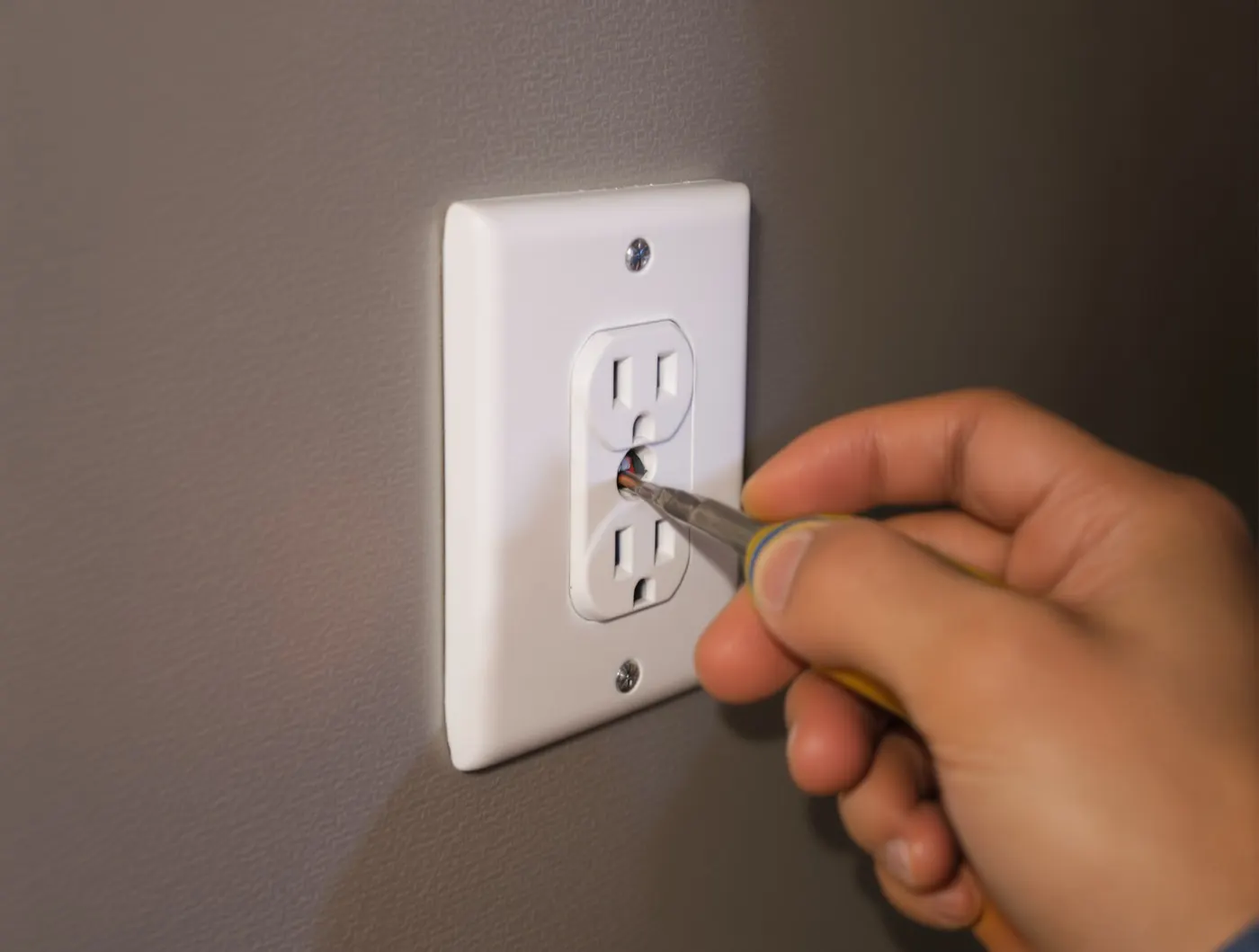
Why outlets die without tripping anything
When one outlet goes dead and the breaker is still on, the usual explanations, in rough order: a GFCI somewhere upstream on the same circuit has tripped — in a bathroom, a garage, or on an exterior wall, sometimes on the far side of the house; the outlet is a switched half-hot, controlled by a wall switch nobody uses anymore; or the outlet itself has simply failed inside.
The last one is more common than it should be, because of how budget-grade receptacles were wired for decades: the conductors pushed into the back of the device instead of wrapped around the screws. Those back-stab connections are the single most common failure point on an older receptacle circuit — the wire relaxes over the years, resistance builds, and the outlet goes dead or runs warm while everything around it still works.
Warm plates, scorch marks and plugs that fall out
Those are not convenience problems. A receptacle that no longer grips a plug lets the plug arc across a loose contact; a plate that is warm to the touch, or discolored around the slots, means heat is already being generated at that device. Stop using it, switch the circuit off at the panel if you can do so safely, and treat warmth or scorching as urgent — not as something to keep an eye on. A plug that slides out of the socket under its own weight is a worn receptacle asking to be replaced, not tolerated.
Two-prong outlets and the grounding question
In the older parts of Grand Rapids, two-prong receptacles are simply the visible end of a two-wire circuit with no ground path. The real fix is rewiring the branch; the accepted interim practice under the national electrical code is a GFCI receptacle fitted in its place and marked "No Equipment Ground" — it adds genuine shock protection without adding a ground, and the marking is honest about the difference. For electronics that actually want a ground — a computer, anything with a three-prong supply — the answer is a dedicated run to that spot. The little gray cheater adapters are not an answer at all.
GFCI and tamper-resistant — what current practice expects
Where GFCI protection is expected now: bathrooms, kitchens, garages, exterior receptacles, unfinished basements — anywhere near water. Tamper-resistant receptacles, with a shutter inside the slots, are the default in new and renovated work. A house that predates both is not automatically unsafe, but upgrading device by device is inexpensive, and it is one of the first things an inspector or an insurer looks at when they open the panel and walk the rooms.
Switches, three-ways and dimmers
Switches wear out mechanically — a three-way circuit where one position stops working is usually a worn switch or a loose traveler, both small jobs. Dimmer complaints are mostly about load matching, same as lighting. The one that changes the scope: smart switches, most of which need a neutral conductor in the switch box. Plenty of older switch loops were run without one, which turns a "swap the switch" visit into a "run a new cable" job. USB receptacles and combination devices are straight swaps when the box has room for them.
What outlet and switch work tends to cost
As a planning range, never a quote: a straightforward receptacle replacement, including the device, typically runs $100–$250; a GFCI receptacle typically $150–$300; a switch typically $100–$200. A service-call minimum usually applies to a one-device visit, which is why people stack a list of small fixes into a single appointment. Diagnosing a dead circuit is priced as time — and the diagnosis usually ends at a failed device, which is the cheap version of the answer.
Outlet questions, answered plainly
Why did my outlet die with the breaker still on?
Receptacles are wired through one another, so a single failed device — often a back-stabbed connection — can kill every outlet downstream of it. Or a GFCI upstream has tripped. An electrician with a meter usually finds which one in a few minutes.
Is a loose outlet actually dangerous?
Yes. Worn contacts let the plug arc, and arcing makes heat. A receptacle that no longer grips is a replacement job, not a quirk to live with.
Can a GFCI replace a two-prong outlet?
With the "No Equipment Ground" marking, yes — it is an accepted replacement under the national electrical code. It protects people from shock; it does not create a ground, so surge-sensitive gear still wants a properly grounded circuit.
Do smart switches need special wiring?
Most need a neutral conductor in the switch box. Older switch loops often have none, which turns a simple swap into a cable run — worth knowing before the hardware is ordered.
Related electrical work in Grand Rapids
- Emergency electrician open now — sparking, warm or smoking devices will not wait until morning.
- Wiring and rewiring — ungrounded and two-wire branch circuits.
- Lighting installation — dimmers, fixtures and the fans that hang above it all.
- Electrical inspection — the whole-house picture behind one dead outlet.
Get an upfront price for this job in Grand Rapids
Tell us what is going on and a local electrician calls you back with a real price — free, and no obligation.
Get my free quote →